
Well Deserve or Well Deserved: Which One Is Correct?
“Well deserve or well deserved” is a common grammar question for English learners because both expressions contain the same words but have different grammatical uses. The correct choice depends on the tense, sentence structure, and meaning you want to express. In most situations, “well deserved” is the correct phrase when you want to say that someone or something has received something they truly earned.
For example, “She received a well-deserved promotion.” On the other hand, “well deserve” can be grammatically correct when “deserve” is used as a present-tense verb, such as “They well deserve this award.” Understanding this small difference can help you write clearer and more natural English.
Well Deserve or Well Deserved: The Basic Difference
The main difference between “well deserve” and “well deserved” is the grammatical role of the word “deserve.” Deserve is a verb, while deserved is its past-tense and past-participle form. “Well deserve” means that someone strongly or completely deserves something. For example, “They well deserve the recognition they received.”
This construction is less common in everyday modern English. “Well deserved” is much more natural when describing an award, success, rest, praise, or another positive result. For example, “Her success was well deserved.” Therefore, when you are describing something that someone has earned fairly, “well deserved” is usually the better and more natural choice.
What Does Well Deserved Mean?
“Well deserved” means that something was fully earned or justified because of a person’s actions, effort, achievements, or behavior. It is commonly used to praise someone for receiving a reward, success, promotion, break, recognition, or other positive outcome. For example, if an employee works hard for many years and receives a promotion, you can say, “The promotion was well deserved.”
The expression can also be used for things other than awards. You might say, “After working all day, she took a well-deserved break.” Here, the phrase explains that the person had a good reason to receive or enjoy the thing mentioned. “Well deserved” is therefore very common in everyday English.
What Does Well Deserve Mean?
“Well deserve” uses “deserve” as a verb. It means that someone or something truly deserves a particular result, treatment, reward, or consequence. For example, “They well deserve the praise they received” means that they genuinely earned that praise. Native speakers often prefer a different word order because “well deserve” can sound formal or slightly unnatural in ordinary conversation.
More natural alternatives include “They really deserve the praise” or “They certainly deserve the praise.” The expression can still be grammatically correct in certain contexts, especially formal writing. The important point is that “well deserve” describes the act of deserving something, while “well deserved” describes the thing that has been earned.
Why Is Well Deserved More Common?
“Well deserved” is more common because English speakers frequently use it as an adjective before nouns or after linking verbs. For example, “He received a well-deserved award” and “Her victory was well deserved” sound natural and familiar. The phrase is especially common when congratulating someone or recognizing an achievement.
You may see it in professional emails, social media posts, news articles, speeches, and everyday conversations. “Well deserved” is also easy to use because it directly describes the result of someone’s effort. Although “well deserve” is not automatically incorrect, it is less common and may sound formal depending on the sentence. For most everyday situations, “well deserved” is the safer choice.
Read More: Cart vs Kart: Meaning, Differences, Examples, and When to Use Each Word
Well Deserved as an Adjective
“Well deserved” often works as an adjective that describes a noun. It tells us that something was earned fairly or deserved because of someone’s effort or achievement. When it comes directly before a noun, a hyphen is normally used: well-deserved. For example, “She received a well-deserved promotion.” Other examples include “He earned a well-deserved victory,”
They enjoyed a well-deserved holiday,” and “The student received well-deserved praise.” When the phrase comes after a linking verb, it is generally written without a hyphen: “The award was well deserved.” Remembering this distinction can help you avoid common punctuation mistakes while using the phrase naturally in your writing.
When to Use Well-Deserved
Use well-deserved when it comes directly before a noun and describes something that someone has earned. This is especially useful for awards, recognition, success, breaks, promotions, praise, victories, and achievements. For example, “She received a well-deserved promotion after years of hard work.”
You could also write, “He enjoyed a well-deserved rest after completing the project.” The hyphen connects “well” and “deserved” because together they function as a compound adjective before the noun. When the phrase appears after a verb such as “was,” “is,” or “seems,” the hyphen is normally unnecessary. For example, “Her success was well deserved” is correct.
When to Use Well Deserved
Use well deserved when the phrase comes after a linking verb and describes a result or situation. Common sentence patterns include “was well deserved,” “is well deserved,” and “seems well deserved.” For example, “The team’s victory was well deserved.” You can also say, “Your success is well deserved.”
These sentences explain that the result was fair because of the person’s effort or performance. This form is extremely common in congratulations and positive comments. If you are unsure whether to write “well deserve” or “well deserved” when congratulating someone, “well deserved” will usually be the appropriate choice. It sounds natural, clear, and grammatically correct in most situations.
Examples of Well-Deserved in Sentences
There are many situations where “well-deserved” is the correct expression. For example, “She received a well-deserved promotion after completing the project successfully.” Another example is, “The player earned a well-deserved victory.” You can also say, “He took a well-deserved break after working for ten hours.”
In professional writing, you might write, “Congratulations on your well-deserved achievement.” In academic contexts, “The student received well-deserved recognition for excellent performance” is natural. These examples show how “well-deserved” normally comes before a noun. The phrase emphasizes that the person earned the positive result through effort, ability, dedication, or good performance.
Examples of Well Deserved in Sentences
“Well deserved” is especially natural after a linking verb. For example, “Your success is well deserved.” You could also say, “Her promotion was well deserved.” Another common sentence is, “The team’s victory was well deserved.” When congratulating someone, you might simply write, “Well deserved!”
This short expression is very common in conversations, comments, and social media. You can also use it in professional communication: “Congratulations on your achievement; it was well deserved.” In each example, “well deserved” describes an outcome that someone earned fairly. The expression can communicate appreciation, admiration, and recognition without requiring a complicated sentence.
Examples of Well Deserve in Sentences

Although “well deserve” is less common, it can appear in grammatically correct sentences. For example, “They well deserve the recognition they received.” Another example is, “The winners well deserve their success.” Many speakers would naturally replace “well” with “really,” “truly,” or “certainly.” For instance, “
They really deserve the recognition” sounds more conversational. “She certainly deserves the award” is also natural. This does not mean “well deserve” is always wrong. Instead, it means that modern English generally has more natural ways to express the same idea. If your goal is simple and conversational English, consider using “really deserve” instead.
Well Deserve vs Well Deserved in Everyday English
In everyday English, the choice usually becomes easy when you identify what you are describing. If you are describing an award, promotion, victory, break, or achievement, use well-deserved or well deserved. For example, “That was a well-deserved win.”
If you are using “deserve” as the main verb, you may use “deserve,” but “really deserve” often sounds more natural than “well deserve.” For example, instead of “She well deserve the award,” say “She really deserves the award.” This distinction makes your English sound smoother. In most everyday situations, “well deserved” is the expression you will hear and use most frequently.
Is Well Deserve Grammatically Correct?
“Yes, well deserve can be grammatically correct, but it is not the most common construction in modern everyday English.” The important thing is the complete sentence. For example, “They well deserve the honor” can be understood as meaning that they truly deserve the honor. However, “They really deserve the honor” is generally more natural.
Also remember that subject-verb agreement still applies. You should not write “She well deserve the award.” The correct form would be “She well deserves the award,” although “She really deserves the award” is much more natural. Therefore, grammar and natural usage are both important when choosing the best expression.
Is Well Deserved Grammatically Correct?
Yes, well deserved is completely correct and extremely common. It can be used after a linking verb, as in “The award was well deserved,” or before a noun as “a well-deserved award.” The meaning remains similar: someone earned something through effort, achievement, or good performance. The main difference is punctuation and position.
Before a noun, “well-deserved” is generally hyphenated. After a linking verb, it is normally written as “well deserved.” Understanding this simple rule makes the expression easy to use. Because it is common in both casual and formal English, “well deserved” is one of the most useful expressions for congratulations and positive recognition.
Well Deserved Meaning in Professional English
In professional English, “well deserved” is often used to recognize an employee’s performance, promotion, award, or career achievement. For example, a manager might write, “Congratulations on your well-deserved promotion.” A colleague could say, “Your recognition is well deserved.”
The phrase sounds positive, respectful, and professional without being overly complicated. It can also be used in business emails, company announcements, LinkedIn posts, and formal congratulations. Because the expression clearly connects achievement with effort, it is useful when praising someone professionally. If you want to congratulate a coworker, employee, manager, or business partner, “well deserved” is generally more natural than “well deserve.”
Well Deserved Meaning in Casual English
In casual English, “well deserved” is often used as a short congratulatory phrase. If a friend completes a difficult task, wins a competition, or gets a promotion, you can simply say, “Well deserved!” This means that you believe the person earned the positive result. You can also say, “That was well deserved” or “You definitely deserve it.”
On social media, “Well deserved!” is especially common because it is short and supportive. The expression can communicate happiness for another person’s success without requiring a long message. This makes “well deserved” useful in conversations, text messages, comments, and informal congratulations.
Common Mistakes With Well Deserve and Well Deserved
One common mistake is writing “She well deserve the award.” Because the subject is “she,” the verb should technically be “deserves,” but even “she well deserves” sounds less natural than “she really deserves the award.” Another mistake is forgetting the hyphen when using the compound adjective before a noun. “
He received a well deserved award” is commonly written as “He received a well-deserved award.” after a linking verb, write “The award was well deserved.” These small details can make your writing more accurate. The easiest approach is to use “well-deserved” before a noun and “well deserved” after a linking verb.
Well Deserved or Well-Deserved?
Both forms can be correct; the choice depends on sentence position. Use well-deserved when the phrase comes before a noun. For example, “She earned a well-deserved promotion.” Use well deserved when the phrase comes after a linking verb. For example, “Her promotion was well deserved.”
The hyphen helps readers understand that “well” and “deserved” work together as one adjective before the noun. Once the phrase appears after the noun and linking verb, the hyphen is generally removed. This rule is not unique to “well-deserved.” English commonly uses hyphens in compound adjectives before nouns to make the relationship between words clearer.
How to Remember the Difference
A simple way to remember the difference is to look at the word that comes after the phrase. If a noun comes immediately after it, use well-deserved with a hyphen. For example, “a well-deserved reward” or “a well-deserved promotion.” If the phrase comes after “is,” “was,” “are,” or “were,” use well deserved without a hyphen.
For example, “The reward was well deserved.” When using “deserve” as a verb, remember that the subject controls its form. “They deserve,” “she deserves,” and “he deserves” are correct. For natural everyday English, “really deserves” is usually preferable to “well deserve.”
Well Deserved Synonyms
There are several expressions that can replace “well deserved,” depending on the context. You can use “fully deserved,” “truly deserved,” “richly deserved,” “thoroughly deserved,” or “earned.” In casual English, “You earned it” is a very natural alternative. For professional writing, “fully deserved” or “rightfully earned” may work well.
For congratulations, “You deserve it” is simple and friendly. Other alternatives include “deservedly earned,” “fairly earned,” and “completely justified,” although these may not fit every situation. Choosing a synonym depends on your sentence and tone. The original expression “well deserved” remains one of the most common and natural choices.
Well Deserved in Congratulations
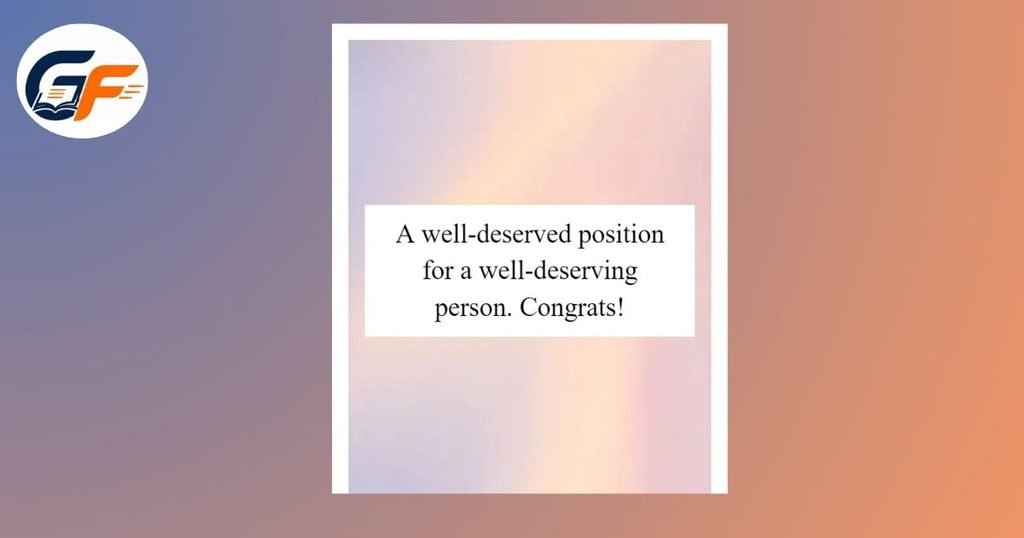
“Well deserved” is one of the easiest phrases to use when congratulating someone. If a person receives an award, promotion, prize, or achievement, you can say, “Congratulations! This is well deserved.” You can also make the message more personal: “Congratulations on your promotion.
It is truly well deserved.” For a short social media comment, simply writing “Well deserved!” is enough. The phrase shows that you believe the person worked hard and earned the recognition. It is suitable for friends, family members, classmates, coworkers, and professional contacts. Because the phrase is positive and respectful, it works in both casual and professional congratulations.
Well Deserved in Social Media and Messages
Social media has made “well deserved” an especially common expression. People frequently comment “Well deserved!” under posts about promotions, awards, graduations, competitions, achievements, and career milestones. The phrase is short but meaningful because it communicates support and admiration. You can also write longer comments such as, “Congratulations on this amazing achievement.
Your success is truly well deserved.” In text messages, “Well deserved!” can be enough when someone shares good news. It is also useful when responding to a friend’s success without sounding overly formal. Because the expression is widely understood, it is a safe and natural choice for online communication.
Well Deserved in Formal Writing
“Well deserved” can also be used in formal writing when the context involves recognition or achievement. For example, “The committee congratulated her on her well-deserved recognition.” It can appear in recommendation letters, business announcements, award ceremonies, academic writing, and official messages.
Formal writing may sometimes benefit from more specific wording. Instead of simply saying something was well deserved, you could explain why it was deserved. For example, “The award was well deserved because of her outstanding contribution to the project.” This provides stronger information and makes the writing more meaningful. Still, “well deserved” remains grammatically correct and professionally appropriate.
How to Use Deserve Correctly
The verb deserve means to be worthy of something because of your actions, qualities, or circumstances. It can be followed by a noun or another grammatical structure. For example, “She deserves the award,” “He deserves recognition,” and “They deserve a break.” With third-person singular subjects, add “s”: “She deserves,” “he deserves,” and “it deserves.”
You can strengthen the meaning with words such as “really,” “truly,” “certainly,” or “absolutely.” For example, “She really deserves the promotion.” This is often more natural than “She well deserves the promotion.” Learning how “deserve” functions as a verb makes the difference much easier to understand.
How to Use Deserved Correctly
“Deserved” can function as the past tense of “deserve” or as a past participle used in descriptive structures. For example, “He deserved the award” describes a past situation. In “The award was well deserved,” the word “deserved” describes the award’s relationship to the person’s achievement.
Before a noun, use the compound adjective “well-deserved,” as in “a well-deserved award.” These structures are common in English and can be used across many contexts. The key is to identify whether you are describing an action that happened in the past or describing something that was earned. This helps you select “deserve” or “deserved” accurately.
Which One Should You Use?
If you are choosing between “well deserve” and “well deserved,” the safest answer in most situations is “well deserved.” Use “well-deserved” before a noun, such as “a well-deserved reward.” Use “well deserved” after a linking verb, such as “The reward was well deserved.”
If you want to use “deserve” as a verb, it is usually more natural to say “really deserve” or “truly deserve” instead of “well deserve.” For example, “They really deserve the award” sounds more natural than “They well deserve the award.” This simple approach will help you sound more fluent and confident in English.
Final Words
The difference between “well deserve” and “well deserved” mainly depends on grammar and natural English usage. “Well deserved” is the more common expression and is used when something has been earned fairly through effort, achievement, or good performance. Before a noun, use the hyphenated form “well-deserved,” such as “a well-deserved promotion.”
After a linking verb, use “well deserved,” such as “Her promotion was well deserved.” “Well deserve” can be grammatically possible, but it is less common and often sounds less natural than “really deserve” or “truly deserve.” When in doubt, choose “well deserved” for most congratulatory and descriptive situations.
FAQs
Is “Well Deserve” Correct English?
“Yes, “well deserve” can be grammatically possible in certain sentences, but it is uncommon in everyday English. Expressions such as “really deserve” or “truly deserve” usually sound more natural.”
Is “Well Deserved” Correct?
“Yes, “well deserved” is completely correct and widely used. For example, “Her success was well deserved.” Before a noun, use the hyphenated form: “a well-deserved success.”
Should I Say “Well Deserve” or “Well Deserved”?
In most situations, choose “well deserved.” If you are describing an achievement, reward, promotion, victory, or break that someone earned, “well deserved” is the natural choice.
What Is the Difference Between Well-Deserved and Well Deserved?
Use “well-deserved” before a noun, such as “a well-deserved award.” Use “well deserved” after a linking verb, such as “The award was well deserved.”